Teaching Imagination

The other night we attended my 12 year old son Liam’s choral concert at his school. Remarkably, we got all six kids fed, dressed and, as planned, we arrived early. That was a fairly remarkable feat considering that we rarely make it to church on time or anywhere else, to be totally honest. We were feeling pretty proud that we were able to choose our seats instead of squeezing into whatever few seats remained. The kids chose to sit way up at the top of the bleachers, so up we went. This was great until the novelty of the fidget spinners wore off and they began to get bored.

As we sat there in the enormous gymnasium my 9 year old Dan became the most vocal about his boredom. He asked if there was anything he could do. I said, “Use your imagination”.

“What do you mean?”

“Imagine that there is a whale in the middle of the room floating above the people down there.” He shot me a sideways, puzzled expression.

“How?” he asked.

I stopped for a moment and thought. Imagining things has always been easy for me. At least for as long as I can remember I’ve been able to imagine anything I could think of. But the imagination is almost a little short of what it is for me. When I think of something I can actually picture it. I can literally (with my eyes open) see what it is I am imagining. I’d always taken this somewhat for granted. I’ve used this to pick out paint colors as I could literally (in my mind) change the color of a room. I’ve used this in crafts, in carpentry, in almost everything. But I’d never stopped to think about how I would teach someone else how to do it.

“Okay” I started. “Close your eyes Dan.” And he did.

“Dan, imagine a whale in the ocean, a huge whale. Picture it…. Can you see it?” He nodded slightly before saying, “Yes”.

“Keep that whale in your mind. Okay Dan, now open your eyes.” I watched as his eyes slowly opened and he glanced over at me. “Now look over toward the middle of the room and picture that whale floating above the people.” I waited a moment and then asked, “Can you see it now?”

“Yes, I can see it now.” His voice was a combination of interest and mild excitement.

“Dan, now you can picture anything you want. That is using your imagination.”

I am pretty confident that I was more excited about the moment then he was. I am still excited about it. As a parent there are things I always anticipated having to teach my kids: a love for cheese, how to read, how to shave, how to drive, how to do algebra, how to swing an ax, but because I took the use of my imagination for granted I never thought I’d need to teach them how to use theirs. There is nothing quite like the feeling of teaching someone a real life skill, something that they can take with them anywhere. And when it is your kid, it is even more special. That special feeling and the idea of sharing in moments like those are what inspired me to want to be a teacher. I’m glad that despite my not being able to pursue that dream at this time in my life I can still have opportunities to be enveloped in that feeling of elated and excited fulfillment. I’m happy I can still teach as a parent.
Politeness. Manners. and kids.

Every parent wants their kids to be respectful and polite toward others. I’ve seen a lot of parents struggle with frustration as their kids act out and don’t show that respect to teachers, pastors, family members and to their own parents. As an observant child I grew up witnessing childhood acts of rebellion and disrespect. I was a pretty decent kid and after brooding on this subject for years decided what I wanted to do with my children, so they wouldn’t end up being selfish disrespectful adults.

Everyone hears all the time that children are “like sponges”.  Until you have a child (or a career as a babysitter) it is hard to know that this means in the real world. Today I stubbed my toe and let fly, “SH!T” as the end of my toenail painfully broke off. Then David (2.5 years old) repeated the choice expletive. It was so much cuter when he said it but that is beside the point. I’d rather my kids not swear. This small example is how kids are like sponges. But let us expand this over two decades of a growing human being living with you seeing how you are. My kids will hear me swear, watch me tip waiters and waitresses, see how I treat their mother, see how I treat my mother, witness me at my best and my worst. You’re probably ‘Duh, so what?’ This is what:

When first meeting my daughter’s kindergarten teacher my wife and I were surprised to hear that she politely referred to her teacher as “mam”. “Yes Mam.” “No Mam” all of that. We were pretty sure at first she had our daughter confused with another child because we lived with her and that was NOT what we got from her at home. But she insisted that little Sophie was indeed our Sophie. That experience taught me something: that kids are little sponges. Now, you need to know the backstory. For years, for Sophie’s entire life actually, I have referred to her as “mam” and her brothers as “sir” (as well as a thousand other nick names I have for them). Sophie paid attention. And she learned respect from me giving her respect and from seeing me give respect to other adults because that is just how I taught myself to speak to people.

I’ve seen far too many parents, who instead of asking for help, make demands of their kids and don’t even say ‘thank you’ to them after. The lesson is simple: If you want your kids to act with respect, respect them as people. If you want them to be polite then they are first going to have to learn it from someone and that someone needs to be you. You are their example. They see how you treat the cashier, the waiter, the telemarketer, the in-laws, the pastor, the neighbor, your partner, your mother, their siblings and them. They are like sponges; give them compliments to absorb and respect to show and show politeness so they can mimic it. BE who you want them to be, not some slave driving, back biting, rude asshole. Don’t be that. Be a good person, so they can be one too.

People are Cyclical

After a lot of thought lately I’ve come to realize that people are cyclical. I’ve always looked at life as a timeline. This is how we measure time. This is how we understand mathematics. We draw lines: positive and negative. Past, present, and future. This turns out to not work well for people and relationships.

496041_48098881

People are cyclical. When looking at myself I’ve always wanted to improve. I constantly want to be better:  a better father, a better employee, a better person. I am not perfect though and as a result am constantly making and learning through my mistakes. But this is NOT a linear process. It is cyclical and here is the process: I decide to change, I work at it, I do better, I plateau, and then I fall back, hopefully not as far as the place I started but I do backpedal before picking up and moving forward again. This doesn’t just happen once. It happens over and over. We move through cycles of improvement or sometimes just cycles of round and round without improvement. The hope is that we don’t get stuck on one cycle that just repeats and repeats and repeats without making progress.

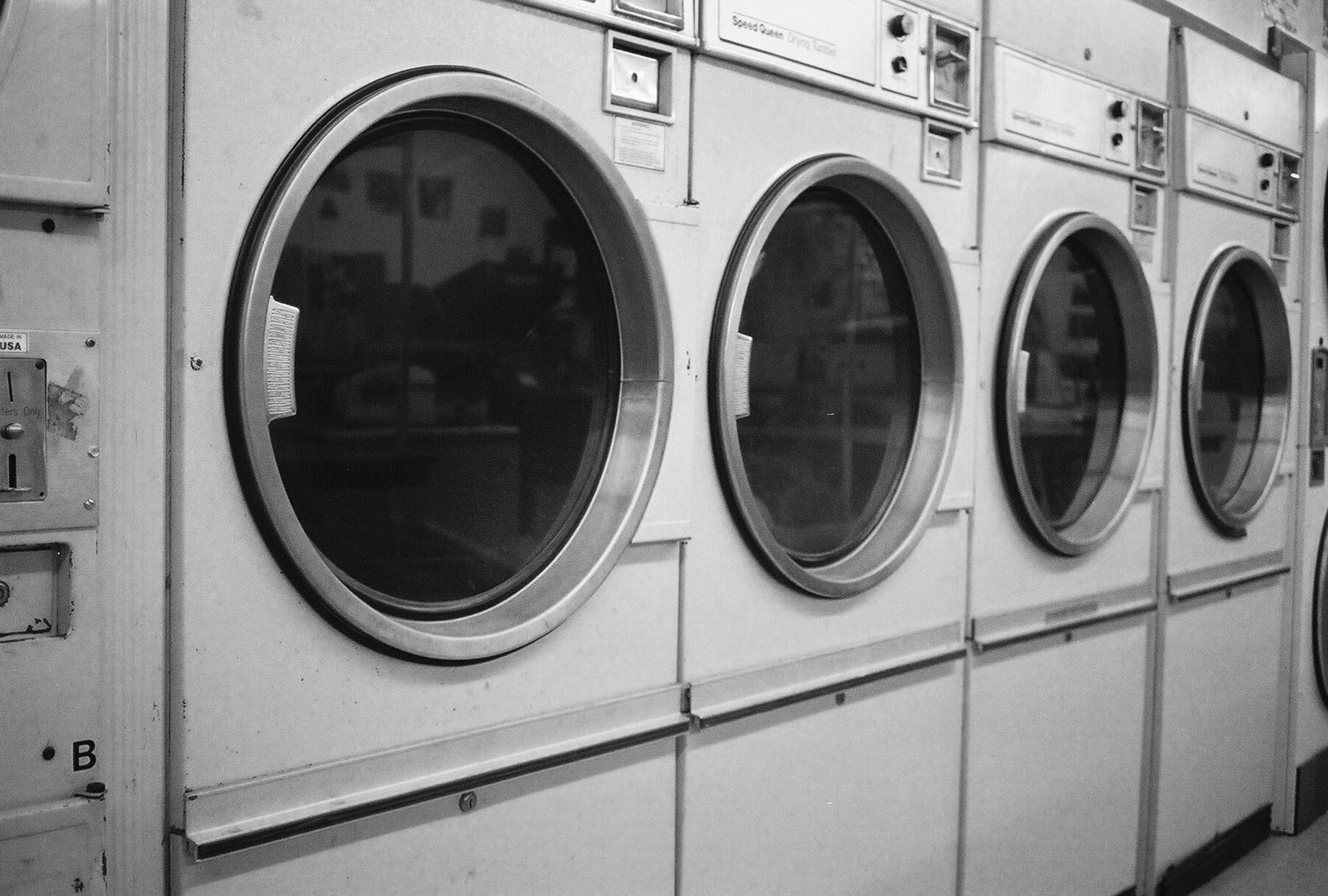
To avoid the negative cycles we need to be aware of them. The easiest and most detrimental place to be stuck in a negative cycle is in relationships with those whom we are closest with. Let’s look at a laundry example. My wife and I share a room and we’ve shared this room with our six kids as they’ve come along and gotten bigger. Currently we’re sharing it with our twin boys. Needless to say by the time we go to bed the lights are already out because there are always babies asleep in their cribs at that time. This tends to result in my clothes never quite making it to the hamper. They often are close but rarely are in. This ticks my wife off. She’ll blow up at me now and then, I’ll make an excuse, do a little better and then slack off giving myself the “lights are off” excuse. And the cycle repeats. This mild example can end up not being mild after a while. Resentment can build, tempers can flare, this thorn in my wife’s side could cause her to go off about something else that normally wouldn’t have bothered her. This spreads the cycle spreads and just because “the lights were out” one of the kids may start off the day on the wrong note before school. Not cool and ultimately my fault.

Breaking the cycle. Breaking cycles is one of the hardest things that we do as people. Addiction is so easy to fall into. The brain loves repetition and rhythm and familiarity. This is one reason people have a hard time ending relationships that are unhealthy; the familiarity is hard to let go of. I’m not sure I have a great strategy for breaking cycles. It is something that I am still working on, this cyclical construct is something that I’ve only recently been enlightened with.

They say that insanity is repeating the same thing over and over and expecting different results and I believe there is truth to that. I think that we, as cyclical beings, fall prey to our own cases of mild insanity more than we realize. We find ourselves in routines of familiarity and thought because we’re used to it. We frequent the same gas stations, restaurants, grocery stores and move in these grand circles. I will say that the people that I know who are most interesting and least burdened by depression are the ones who explore. Who venture to other gas stations. Who take weekend trips and vacations finding and exploring new places. Those who make it a goal to live beyond their cycles, beyond their repeating circles and repetitions are the ones who seem to discover a deeper meaning and measurable happiness and contentment. That being said I feel there is a measure of familiarity we all need to stay grounded and to feel part of a community. But take a look and break the cycles you can to keep your life moving happily forward.

Being a parent is a lot of responsibility and a lot of work but that work can be so much easier and the expenses can be so much less. When the expenses are lower and the guess work is removed it frees up more of your energy and time for you to spend with your little one.

I am a parent; in fact I’m a father of six amazing and unique little monsters that I absolutely adore. In my time as a parent I’ve learned a lot about being a parent, being wiser with my finances, and a whole lot of things that I sure wish I had known when I started out this roller coaster ride of responsibility. I wanted to share some of the tricks I learned, some of the tools that have helped me become a better father. So here they are, tips on car seats, diapers, discipline and a number of other things that hopefully will help you as a new parent or simply as a parent, like me, wanting to be a little better than you were yesterday. Enjoy!

*note: as a parent of six I often write my posts late at night which makes them suspect to spelling or grammar mistakes. If you find one, deal with it… and let me know and I’ll fix it. 🙂

-Nathanael